
From COP28 President Sultan Al Jaber claiming there was “no science” behind the need to abandon fossil fuels, to the Samoa-chaired Alliance of Small Island States (AOSIS) saying it was not in the room when the final agreement was struck, COP28 made headlines for its controversial moments.
Military emissions largely went under the radar – in both the COP agenda and headlines.
Go deeper with GlobalData


Discover B2B Marketing That Performs
Combine business intelligence and editorial excellence to reach engaged professionals across 36 leading media platforms.
“COP28 has made progress in finally acknowledging that we must transition away from fossil fuels, but yet again militaries have been excused from climate action”, Ellie Kinney, campaigner for the Conflict and Environment Observatory (CEOBS), told Army Technology.
From Gaza to Ukraine
On 6 December, more than 200 researchers from 90 organisations across 26 countries released the Global Tipping Points report.
As the largest-ever study on climate tipping points, Global Tipping Points highlights both warfare and everyday military activities as major drivers of global carbon emissions.
The report also illustrates how conflicts are hindering climate action – highly relevant to COP28 in Dubai, which took place just 2,400km away from Israel’s assault on Palestine.
Russia’s invasion of Ukraine received similar attention.
Alongside organisations including CEOBS and GHG Accounting of War, Ukrainian delegates hosted an event on 4 December focusing on the military emissions gap.
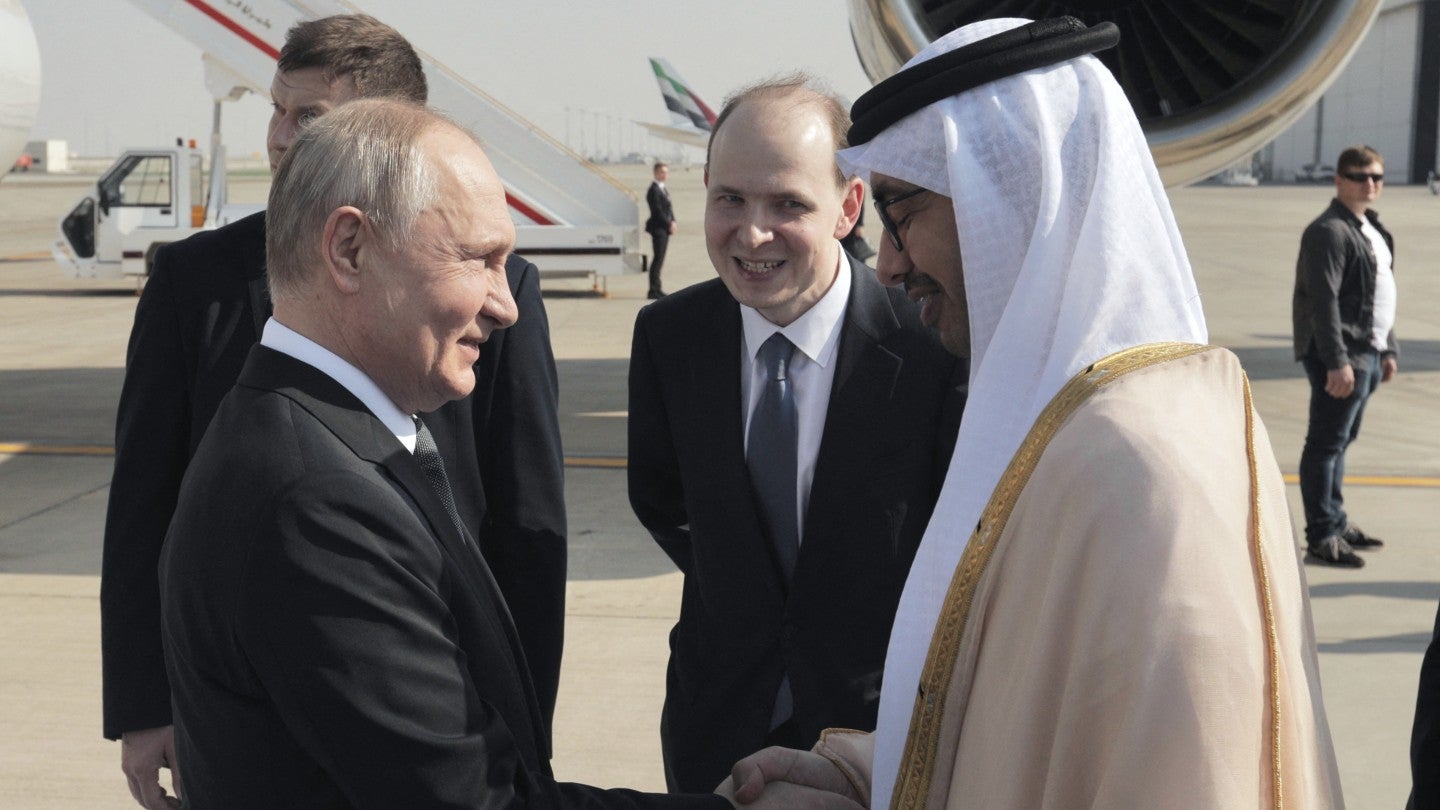
Ukraine’s pavilion foregrounded the environmental damage caused by the conflict with Russia – and was dismayed to discover that President Putin had landed in the UAE on 6 December.
Putin arrived in Abu Dhabi to a warm reception, reportedly to discuss oil deals with Emirati Sheikh Mohamed bin Zayed Al Nahyan, before flying to Riyadh to meet with Saudi Arabia’s Crown Prince, Mohammed bin Salman.
Researchers have estimated that the emissions for the first seven months of the war amounted to 100 million tonnes of carbon dioxide equivalent – the same amount as the Netherlands’ total emissions over the same period.
Military emissions struggle for COP28 headline space
As civil society ramps up the pressure on states and the United Nations Framework Convention on Climate Change (UNFCCC) to address militarism, COP28 hosted a record number of side events focusing on the link between militaries and climate crisis.
“While it is promising to see root causes of the climate crisis being named, militarism continues to be ignored within negotiations,” Kinney said. “States must acknowledge defence as a fossil fuel intensive sector and call on Governments to report their military emissions and set reduction targets in line with the aims of the Paris Agreement.”
Militaries are still not obligated to disclose or reduce greenhouse gas (GHG) emissions, an exemption that has existed since the US Department of Defence (DoD) made it part of the Kyoto Protocol at COP3 in 1997.
“The DoD pushed to get the exemption in the first place,” Neta Crawford, Professor of International Relations at the University of Oxford, told Army Technology. “They could push for better accounting, and publish better accounting right now.”
In Dubai, military emissions did not receive the attention called for by climate campaigners, academics, and the United Nations Development Programme.
With global defence budgets on the rise as conflicts from Ukraine to Sudan to the Middle East show no sign of ceasing, scrutiny over the climate impact of military operations is expected to increase proportionately ahead of COP29 in Baku, Azerbaijan.
Our signals coverage is powered by GlobalData’s Thematic Engine, which tags millions of data items across six alternative datasets — patents, jobs, deals, company filings, social media mentions and news — to themes, sectors and companies. These signals enhance our predictive capabilities, helping us to identify the most disruptive threats across each of the sectors we cover and the companies best placed to succeed.


