
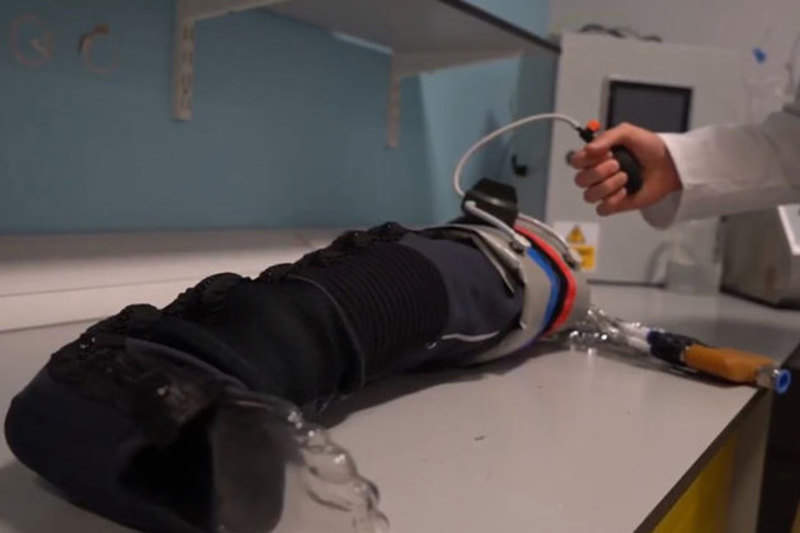
Latest research funded by the UK Defence Science and Technology Laboratory (Dstl) through the Defence and Security Accelerator has developed a new technique to treat injured limbs.
Developed by biomedical engineers at the University of Strathclyde, Glasgow, Scotland, the technique is expected to reduce the number of amputations caused by battlefield injuries.

Discover B2B Marketing That Performs
Combine business intelligence and editorial excellence to reach engaged professionals across 36 leading media platforms.
The research has been conducted following traumatic experiences in battlefields in Iraq and Afghanistan, where advanced explosive devices cause severe injuries to soldiers.
The new technique is a three-stage approach that offers a kit that can be used in the combat field. It also provides highly specialised solutions to patients once they are taken to a care facility.
As part of the treatment, a tourniquet is applied to the limb, which applies pressure at different points designed to reduce damage caused to specific areas.
Following this, a cooling ‘sock’ is wrapped around the injured tissue to protect it from further damage until the patient is evacuated to a hospital. The limb is placed inside a protective ‘box’ at the hospital, which can sustain the area while doctors try to repair the tissue.

US Tariffs are shifting - will you react or anticipate?
Don’t let policy changes catch you off guard. Stay proactive with real-time data and expert analysis.
By GlobalDataDecontaminated air inside the protective box helps reduce infection and supplies the affected area with blood.
University of Strathclyde Department of Biomedical Engineering head Terry Gourlay said: “We looked at every stage of the journey an injured soldier follows after injury to ensure our solution was designed specifically for them.
“The system we have developed is essentially a life-support system for the limb which gives doctors precious time to attempt to repair damage while ensuring the safety of the patient.”
The lightweight technology weighs just 5kg, specifically designed to be deployed on military operations and used by combat medics.
Professor Gourlay’s research team also pioneered a blood salvaging technique, which enables the blood lost in surgery to be transfused directly back to the patient.
Known as HemoSep, the technique helps reduce the need to use donated blood. A military version of the HemoSep project was funded by Dstl.


