
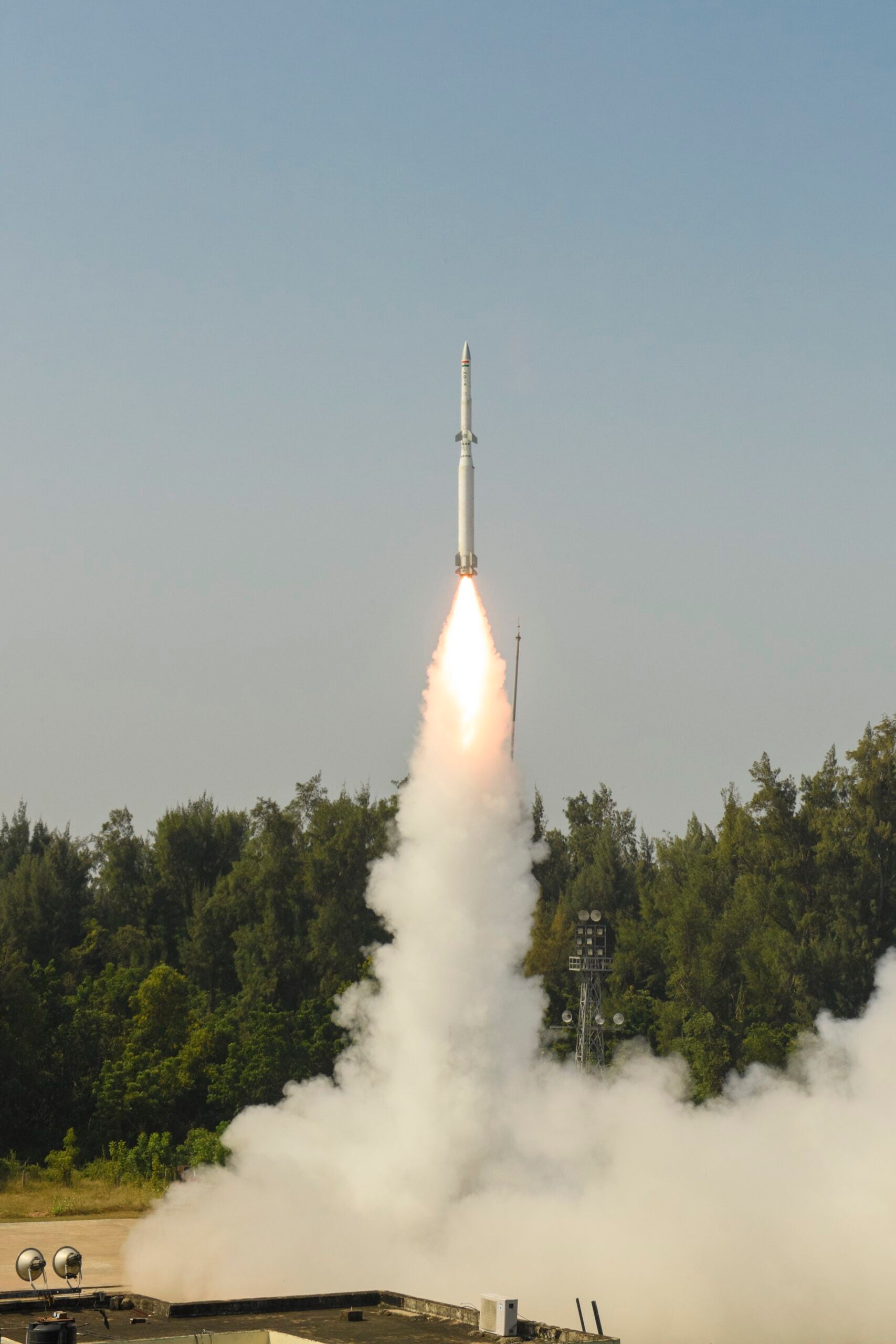
The Indian Defence Research and Development Organisation (DRDO) has successfully conducted the maiden flight test of the phase-II ballistic missile defence (BMD) interceptor AD-1.
With a large kill altitude bracket, the missile interceptor took off from APJ Abdul Kalam Island off the coast of Odisha state.
Go deeper with GlobalData


Discover B2B Marketing That Performs
Combine business intelligence and editorial excellence to reach engaged professionals across 36 leading media platforms.
All BMD weapon system elements placed at various locations were involved in the flight test.
The flight data tracked by radar range sensors, telemetry, and electro optical tracking stations validated the test.
As per the data, all sub-systems involved in the flight test performed as per expectations.
In a statement, the Ministry of Defence said: “The AD-1 is a long-range interceptor missile designed for both low exo-atmospheric and endo-atmospheric interception of long-range ballistic missiles, as well as aircraft.”
Powered by a two-stage solid motor, the interceptor features an indigenously developed control system.
Navigation and guidance algorithms precisely lead the vehicle to the target concerned.
Lauding the efforts of the DRDO and associated teams, Indian Defence Minister Rajnath Singh said the ‘unique’ interceptor with modern technologies will further enhance the nation’s BMD capability.
Department of Defence R&D secretary and DRDO chairman Samir Kamat said the missile defence interceptor has the capability to engage multiple targets and will provide its users with operational flexibility.
In September this year, the DRDO carried out two test flights of very short-range air defence system missiles.
Powered by a dual thrust solid motor, the indigenously developed portable air defence system neutralised low altitude aerial threats at short ranges.



