
Sky Power International’s CEO Karsten Schudt outlines how rising intelligence, surveillance, and reconnaissance (ISR) demands, hybridization, and geopolitics are reshaping UAV propulsion—and why engines aren’t a commodity but a strategic enabler.
From German-engineered two-stroke, Wankel, heavy fuel (HF) and hybrid systems to rigorous FAR33 testing, CAN-bus-enabled efficiency, and global support, Schudt makes the case for early co-development with integrators, measurable mean time between failures (MTBF) and total cost of ownership (TCO) gains, and procurement clarity through pre-validated data—so platforms fly farther, carry more, and stay mission-ready longer.
Go deeper with GlobalData


Discover B2B Marketing That Performs
Combine business intelligence and editorial excellence to reach engaged professionals across 36 leading media platforms.

Army Technology (AT): What is Sky Power’s core purpose and the promise you want customers to remember?
Karsten Schudt: Sky Power’s main goal is to provide reliable, efficient, and ready-to-use propulsion systems for unmanned and mobile propulsion applications. With our in-depth expertise in the development and manufacture of UAV engines, we stand for the highest quality, uncompromising reliability, and technological excellence. We promise our customers tailor-made solutions with comprehensive lifecycle support so that their platforms remain operational longer, can carry more payload, and meet the most demanding certification or mission standards.
AT: Which industry shifts are shaping your strategic priorities today, and why do they matter to your customers?
Karsten Schudt: Three major changes are shaping our roadmap:
- The increasing demand for reliable propulsion solutions due to the global geopolitical situation
- The demand for ever greater ranges, especially for ISR missions
- Hybridization of UAVs to extend range and logistical flexibility
AT: What is the single biggest lesson Sky Power learned while scaling from prototype to fielded systems?
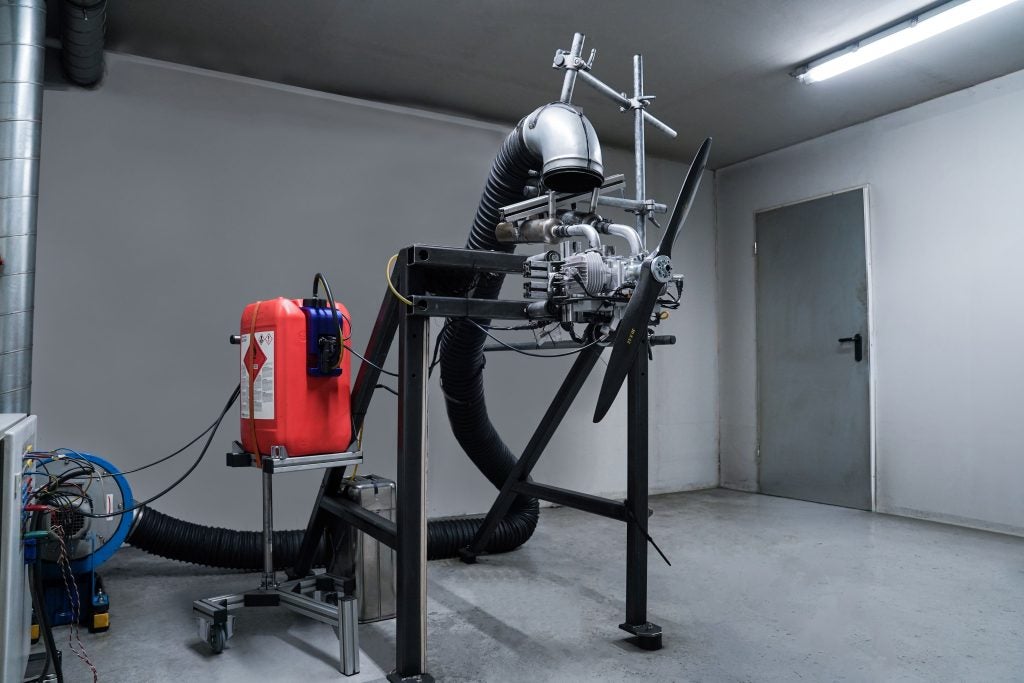
Karsten Schudt: The most important lesson is to collaborate with integrators and end users from day one. Only laboratory testing or test runs on a test stand are not sufficient enough, as UAV-propulsion systems must be validated under realistic conditions. This early collaboration shortens time to market and increases reliability.
AT: How do you decide which markets and product areas to prioritize across commercial UAS, ISR and mobile‑power segments?
Karsten Schudt: We know our customers and therefore understand exactly what they require from propulsion systems for UAS. We use this knowledge to develop options for existing products and future developments. For example, the demand for low fuel consumption and longer ranges was already apparent years ago. Our products were designed with this in mind, e.g., with injection systems or CAN-bus-communication, and today these engines are ideal for use in ISR missions.
AT: From a business perspective, what differentiates Sky Power when customers and partners evaluate suppliers?
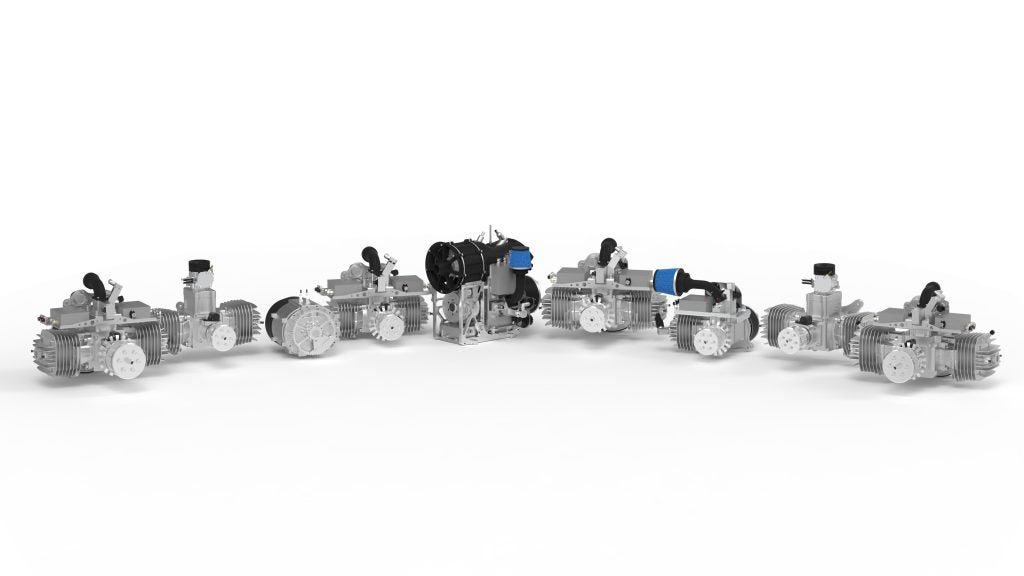
Karsten Schudt: Sky Power offers a comprehensive portfolio of innovative propulsion solutions, ranging from wide range of powerful two-stroke engines and efficient Wankel engines to HF and hybrid propulsion systems or pure generator solutions. All systems are characterized by German engineering and manufacturing quality and are supported by a global support network. Thanks to flexible customization options and targeted support, like service and maintenance, engineering service, test runs and project management, customers receive tailor-made and future-proof propulsion solutions. This is a combination that is rarely found among propulsion suppliers.
AT: How do you balance near‑term commercial opportunities with longer‑term investments in R&D and innovation?
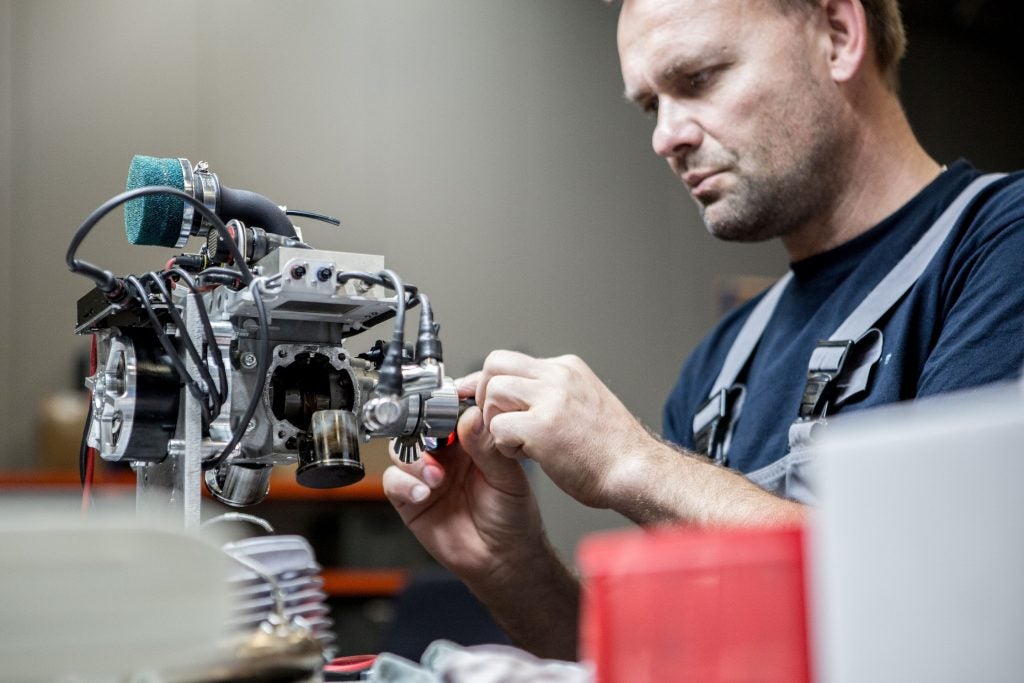
Karsten Schudt: We reserve a fixed portion of our revenue for core research and development so that innovation can continue even during busy production cycles. The results and experience gained from projects then serve as a source of innovation for gradual improvements that are incorporated into our long-term roadmap.
AT: What role do partnerships and ecosystem plays (OEMs, integrators, primes) have in achieving your growth plans, and how do you structure those relationships?
Karsten Schudt: We treat OEMs, suppliers, and integrators as strategic partners, not just customers. Joint engineering teams, collaborative development efforts, and clear program milestones ensure that everyone benefits from reduced risk and faster delivery, ultimately resulting in propulsion systems that perfectly match mission requirements.
AT: How do you make procurement teams’ lives easier when they evaluate new propulsion suppliers?
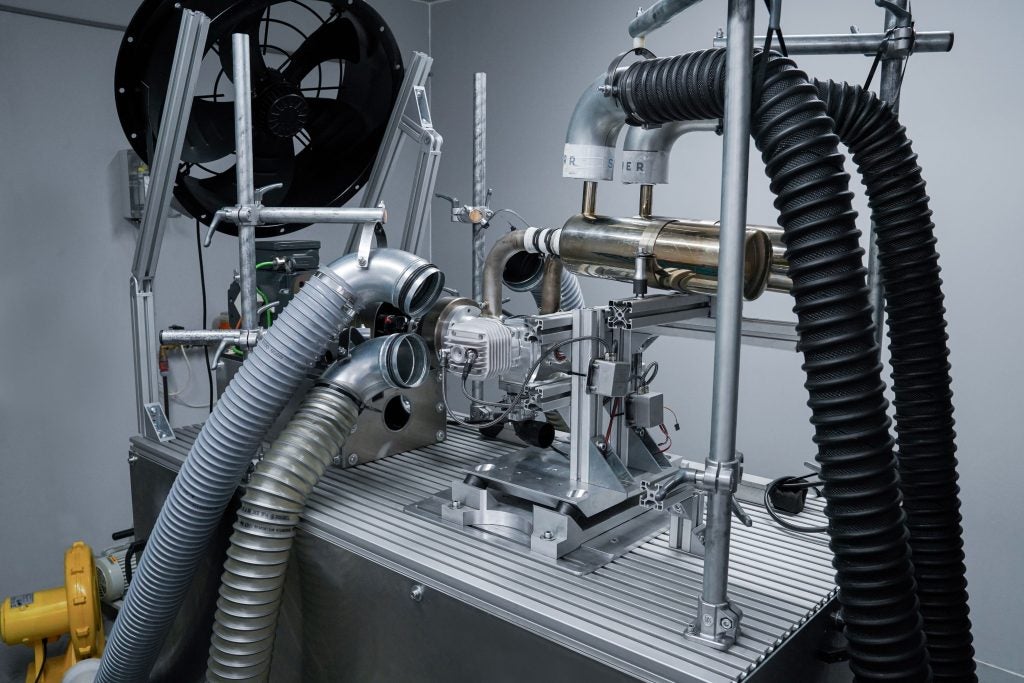
Karsten Schudt: We can subject our engines to various tests on our own test benches. We provide our customers with the data obtained in advance. This allows the development and procurement departments on the customer side to compare total operating costs and integration schedules without any hidden surprises.
AT: How do you demonstrate and measure the business outcomes your solutions deliver (e.g., mission readiness, uptime, total cost of ownership)?
Karsten Schudt: This is difficult, as our engines are often used in applications where data is confidential. However, when we test engines on our test benches, we obtain important data, especially during FAR33 long-term tests. We measure operational readiness, MTBF, fuel consumption, maintenance intervals, and cost per operating hour, and share dashboards or case studies with our customers. We can extract a lot of information from this data, which not only flows into product development but also helps our customers make decisions.
AT: Which commercial models (outright sale, service contracts, availability agreements, financing) are you prioritising to accelerate adoption?
Karsten Schudt: In addition to sales, we offer services ranging from early project definition to series production. We provide consulting services to help clarify goals and requirements and contribute technical expertise. In workshops, we analyze ongoing projects together to clearly define requirements and expectations and prepare for close cooperation. As part of project management, we ultimately take over complete control from the concept phase to series production, including clear parameters, schedules, and budgets for agile and efficient development.
AT: How do you ensure manufacturing scalability, supply‑chain resilience and consistent quality as demand grows?
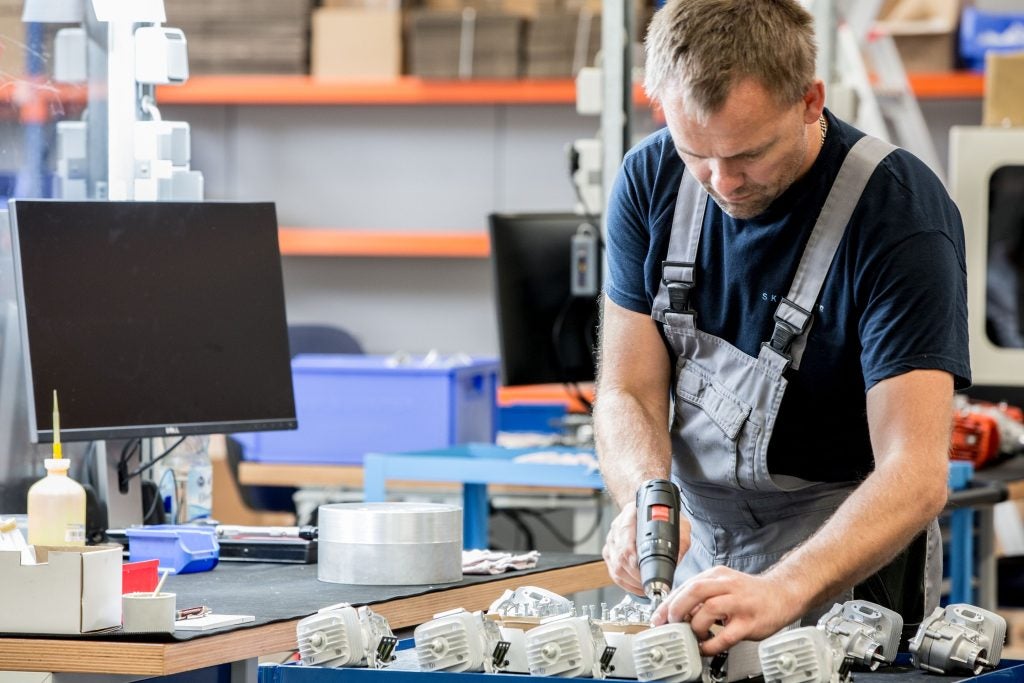
Karsten Schudt: Furthermore, we work with local manufacturers for critical supplier parts to ensure rapid exchange. We generally work with our suppliers for a very long time, so that a long-standing partnership has developed based on this trust. Since we source some parts from all over the world, we place great importance on quality assurance and testing when the parts arrive at our premises. That is why we have invested in sophisticated testing equipment to measure cast parts in order to ensure that the engines run smoothly and reliably later on.
AT: How does Sky Power balance commercial priorities with environmental and social responsibilities in product decisions?
Karsten Schudt: In new designs, we emphasize fuel efficiency, lower emissions, and reusable components, and we work with suppliers who meet strict environmental and occupational safety criteria. This not only reduces our environmental footprint, but also our customers’ compliance risks.
AT: What one common misconception about propulsion suppliers would you like to correct for enterprise buyers?
Karsten Schudt: That “an engine is a commodity.” In fact, the propulsion system determines the payload, endurance, safety, and lifecycle costs. If it is viewed as a strategic subsystem rather than a commodity, significantly better mission economics can be achieved. Furthermore, the engine is the critical component for reliable UAVs and a successful mission. Purchasing decisions that are solely price-driven usually lead to increased costs down the line, as “promised” ranges or similar specifications are not met. Unfortunately, we have found that projects and market launches have been delayed by purely price-driven decisions in favour of an engine, and the entire project had to be restarted from scratch.
And never scale too small. Of course, a propulsion unit weighs something, and this must be taken into account in the project planning from the beginning. This means that in order to meet the target specifications, you must plan for an engine with sufficient power. Attempts should not be made to achieve targets by reducing the engine weight through the selection of a smaller propulsion unit. However, this also means that we as engine specialists should be involved in new projects as early as possible.
AT: Looking ahead, what are the key business milestones you most want customers and partners to remember Sky Power for — and in one sentence, what is your message to procurement officers?
Karsten Schudt: I have a clear message for development managers and procurement officers: Choose the propulsion system as a strategic enabler. At Sky Power, we are your partner, supplying engines, support packages, components, spare parts and knowledge that support and protect your mission and your budget.
AT: Karsten, thanks for cutting through the noise on what really drives mission economics. Your emphasis on early collaboration, verifiable performance data, and treating propulsion as a strategic subsystem—not a line item—will resonate with program managers balancing endurance, payload, and readiness under tight schedules. We look forward to tracking Sky Power’s next milestones in hybrid range extension and lifecycle support as ISR and multi-mission UAS requirements continue to scale.



