

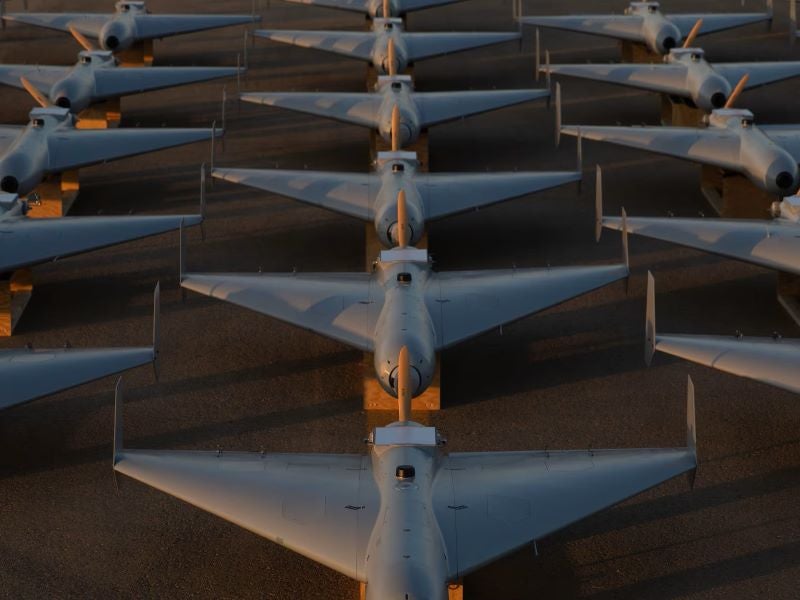
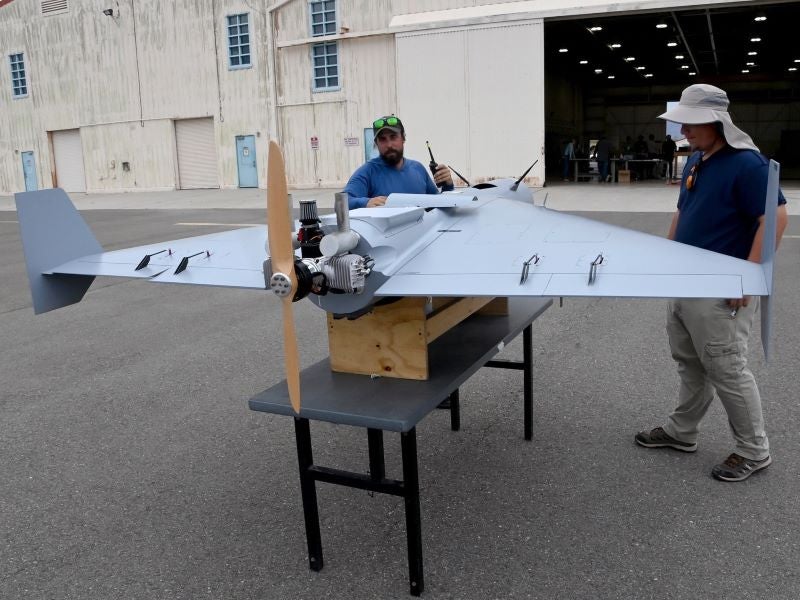
The FLM 136 attack drone is a flexible loitering munition developed by SpektreWorks, an uncrewed systems developer based in Arizona, US.
Media reports suggest that the FLM 136 has been designated as a Low-cost Uncrewed Combat Attack System (LUCAS) during the ongoing Operation Epic Fury launched by the US and Israel against Iran in February 2026.
Recommended Buyers Guides

In March 2026, US Central Command (CENTCOM) announced that the LUCAS drones were deployed for the first time in combat in the current Iran-Middle East crisis, although official details remain limited.
FLM 136 design and features
The FLM 136 drone measures 3m (9.8ft) in length, stands at a height of 0.45m and has a wingspan of 2.5m.
The empty aircraft weight of the drone is 31.75kg, and the maximum take-off weight is 81.5kg. The drone has a maximum payload weight of up to 18kg, and its fuel capacity is listed as up to 31.75kg.
The FLM 136 loitering munition closely resembles Iran’s Shahed 136 kamikaze drone. It has been reverse-engineered to replicate real-world threat profiles for training and evaluation.
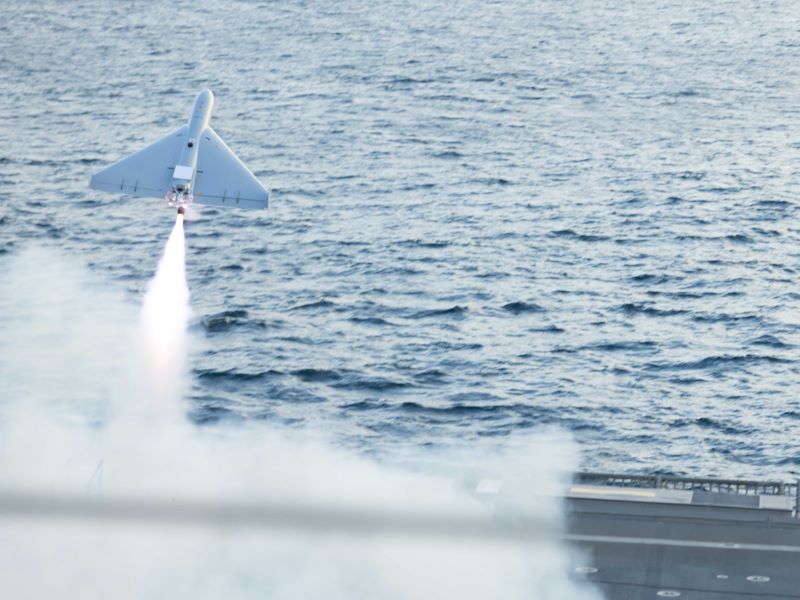
The drone is designed to operate across a broad set of environmental conditions and can be launched using different methods, which include a pneumatic launcher and rocket-assisted take-off (RATO), to match mission needs.
The platform supports a large payload capacity through a modular, open architecture design, with interchangeable modules and auxiliary bays that allow equipment to be integrated or updated as operational needs change.
It also maintains a small operational footprint and can operate autonomously from take-off to landing.
Engine and performance of FLM 136
Propulsion for the FLM 136 is provided by a 215cc carburetted internal combustion engine (ICE).
The FLM 136 features a dash speed of around 100 knots, a cruise speed of 55 knots, and an endurance of approximately six hours.
The drone has a reported service ceiling of above 10,000ft density altitude with an operational range of 350 nautical miles.
LUCAS drones’ testing and deployment
The LUCAS drone was first unveiled in July 2025 as part of a multi-domain autonomous display that was showcased at the Pentagon. The prototypes displayed went from concept to development within 18 months.
The display at the Pentagon was preceded by an executive order signed by US President Donald Trump in June 2025 to accelerate the development of drone production in the US.
Furthermore, Secretary of War Pete Hegseth issued a memorandum in July 2025 to withdraw the restrictive measures that were limiting the manufacture of drones in the US. He stated that adversaries are producing millions of low-cost drones annually, while the US armed forces currently do not have enough small lethal drones in service.
Subsequently, the US Army conducted trials of the LUCAS drone at Yuma Proving Ground in December 2025, in an activity sponsored by the US Marine Corps (USMC). The test programme used inert payloads. The munition intended for integration was meant to be low-cost and produced in quantity by multiple manufacturers.
In the same month, CENTCOM announced the formation of a new task force to establish the first US military squadron of one-way attack drones based in the Middle East.
The squadron named Task Force Scorpion Strike has already established a squadron of LUCAS drones based in the Middle East.
Separately, a first launch of a LUCAS drone from the flight deck of the Independence-class littoral combat ship USS Santa Barbara (LS 32), during operations in the Arabian Gulf, took place in December 2025. The sortie was conducted by Task Force 59, a component within the Task Force Scorpion Strike.
