
Reventec, a specialist in vehicle sensor design and manufacture, has won the Innovation Award in the Position Sensing category in the 2025 Army Technology Excellence Awards for its Tracked Vehicle Suspension 80° Arc Position Sensor. The company has been recognized for addressing a persistent measurement challenge in tracked vehicle suspensions, where conventional sensors either could not be accommodated within severe spatial constraints, could not withstand harsh operating environments, or could not deliver the quality of data required for modern armored platforms.
By combining a compact mechanical envelope with non-contact Tunnelling MagnetoResistive (TMR) technology, high-speed data outputs and a fully ruggedized design, Reventec has delivered a solution that strengthens the role of suspension sensing in Army ground vehicle performance and lifecycle management.
Go deeper with GlobalData


Discover B2B Marketing That Performs
Combine business intelligence and editorial excellence to reach engaged professionals across 36 leading media platforms.
High-fidelity suspension measurement in confined tracked bogies
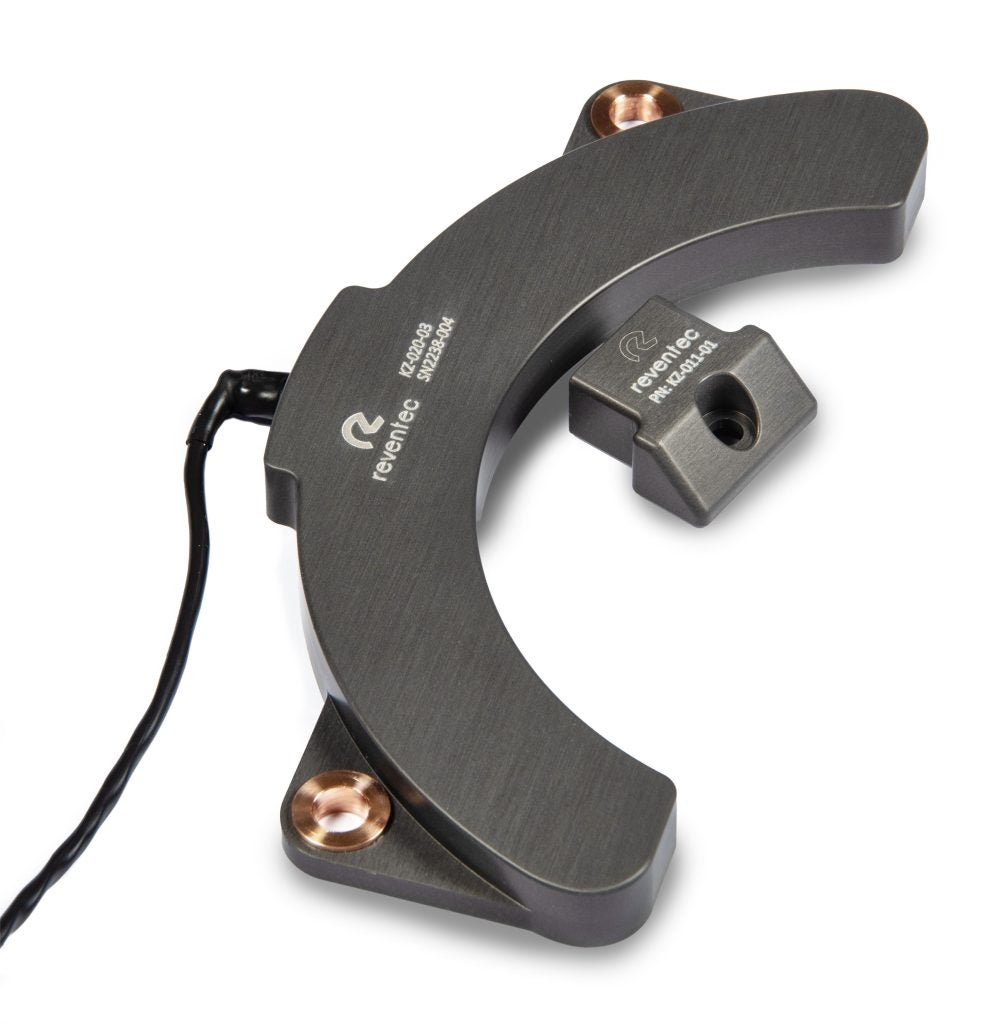
Tracked combat vehicles place significant demands on sensing systems. Suspension arms move through large arcs under high loads, within constrained bogie housings that are exposed to mud, water, vibration and impact. In these conditions, obtaining accurate, continuous suspension-position data has been difficult, particularly where the space available inside or around the suspension arm is limited.
Reventec’s Tracked Vehicle Suspension 80° Arc Position Sensor is designed to measure the movement of a suspension arm on a tracked ground vehicle across a 0–80 degree range, within these tight spatial envelopes. Its form factor and mounting approach allow it to operate in locations where larger or more intrusive legacy sensors would not fit or would be more exposed to damage. As a result, users can obtain suspension-state data with a level of completeness and reliability that has been hard to achieve in similar applications using earlier technologies.

This access to consistent, high-quality arc-position data supports more detailed understanding of suspension behavior under real-world conditions. Suspension and vehicle manufacturers can use this information in the development and refinement of low silhouette outline signatures and active ride-height management systems, as highlighted in Reventec’s submission. It also enables more evidence-based assessment of stability and maneuverability over varied terrains, all of which are increasingly important in the design and upgrade of tracked military vehicles.
Fast, platform-ready outputs for advanced suspension control
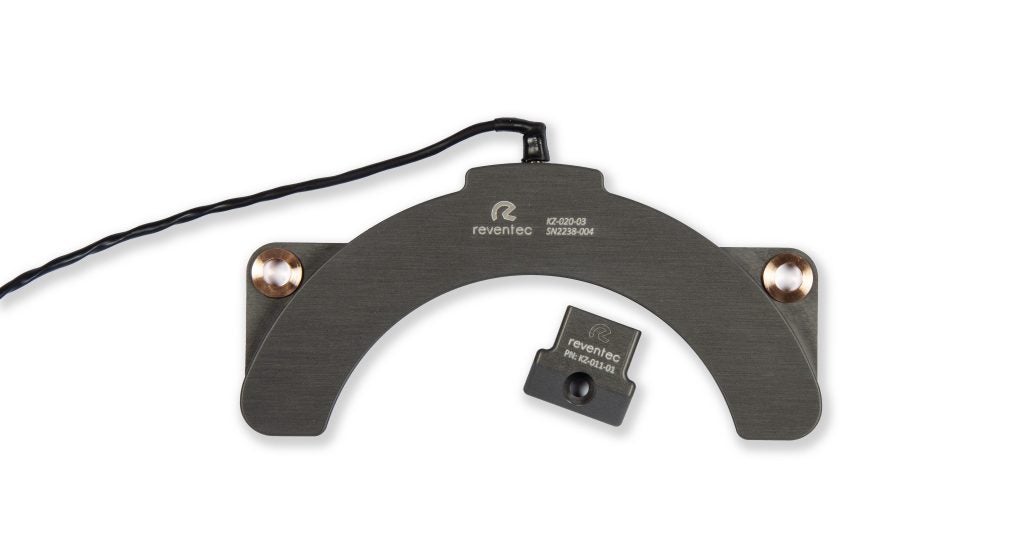
Beyond its mechanical design, the sensor’s electronics and output architecture are central to its utility. The device offers a rapid 5 kHz update rate for continuous movement measurement, with integrated CPU processing that provides both CAN 2.0A and analog voltage outputs (0.5 VDC to 4.5 VDC) directly from the sensor.
This combination allows the sensor to deliver real-time positional data at a rate well suited to demanding control applications, including active ride-height adjustment and suspension control. By supplying both digital and analog interfaces without requiring an external processor, the sensor can be integrated into different generations of vehicle electronic architectures, from more traditional analog-based systems to contemporary CAN-based networks. This reduces system complexity and supports tighter, more responsive control loops where required.
In practical terms, precise, high-frequency suspension-position data enables more accurate ride-height management, including the ability to support static low silhouette configurations and dynamic adjustments for vehicle stability and mobility across changing terrains. The sensor, therefore, provides a clear link between arc-position measurement and the operational functions of ride-height and silhouette management that are already being pursued by vehicle and suspension manufacturers.
Non-contact TMR design for harsh-duty reliability and maintenance benefits
Suspension locations on tracked vehicles are subjected to constant vibration, shock, dirt, moisture and frequent high-pressure cleaning. These conditions have often led to premature wear and failure in contact-based sensing solutions. Reventec’s use of non-contact Quantum TMR™ technology directly addresses these environmental challenges.
The sensor measures position across air gaps and through non-ferrous materials, removing the need for mechanical contact and associated wear surfaces. Its IP69K ingress protection rating, 15 bar pressure rating and operating temperature range of -40°C to +125°C indicate that it has been designed for sustained operation in harsh, dynamic environments. The non-contact architecture, combined with solid-state construction, is intended to minimize common suspension-mounted sensor failure modes and reduce the frequency of maintenance interventions.
From a lifecycle perspective, reliable and repeatable positional data over time can support more proactive approaches to maintenance. Continuous monitoring of suspension movement provides a foundation for identifying abnormal behavior or emerging issues earlier than might be possible with less frequent or less accurate measurements. By shifting towards condition awareness based on high-fidelity data, operators can better plan maintenance activities and reduce unplanned downtime, improving overall vehicle availability.
The sensor has been designed to meet stringent EMC standards for defense applications, including MIL-STD-461G Army Ground Limits (CS114, CS115, CS116, RE102, RS103, RS101, CE102, CS101), RTCA DO160F Section 25 ESD Cat. A, DEF STAN 59-411 and DEF STAN 59-41, supporting its use on Army ground platforms where electromagnetic resilience is critical.
Configurable, retrofit-friendly architecture for diverse fleet
Defense fleets typically comprise a mix of platform types and vintages, and a new sensor technology must be adaptable if it is to be used widely. Reventec’s approach with the Tracked Vehicle Suspension 80° Arc Position Sensor emphasizes configurability around a common sensing core.
The Quantum TMR™ sensor range is factory-calibrated to user specifications, and Reventec can provide a graphical user interface for customers who wish to program their sensors in the field. Around this core capability, the company offers options for housing geometry and materials, cable lengths and a range of connector interfaces, including MIL-DTL-38999, autosport, subsea and flying leads. The sensor can be supplied with analog or CAN outputs without the need for additional external CPU processing.
This modular design allows the core sensing technology to be packaged for different installation envelopes and electronic architectures, easing integration on both new platforms and retrofit programs. It also supports use across multiple sectors, with the product described as suitable for hard-working vehicles in off-highway, motorsport, defense, UAV, industrial, automotive, rail and maritime applications. For Army and defense OEMs, this breadth of applicability strengthens supply-chain resilience and long-term support, helping to underpin production volumes and technology continuity.
Company Profile
Reventec manufactures mil-spec vehicle sensors for extreme environments. Reventec’s capacitive liquid level sensors, non-contact position sensors, and programmable temperature sensors provide exceptional accuracy, reliability and customisation – ideal for vehicle upgrades and new platforms. Reventec’s vehicle health monitoring improves predictive maintenance, enables quick deployment and reduces vehicle downtime. Founded in 2013 and based in Salisbury, UK, Reventec offers custom programmable sensors for different applications across the Motorsport, Automotive, Defence, Unmanned Aerial Vehicles and Industrial sectors.
Contact Details
E-mail: info@reventec.com
Telephone: +44 (0)1725 510321
Links
Website: https://www.reventec.com/


