
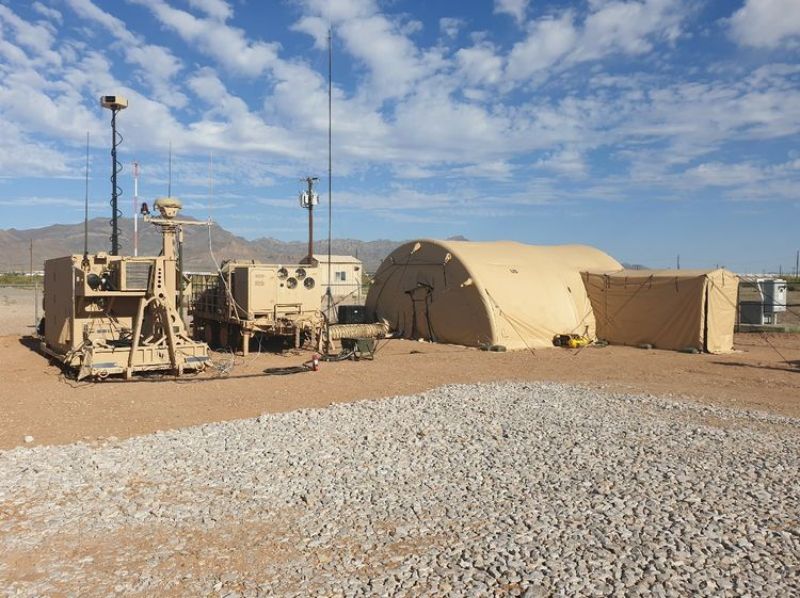
The US Army has conducted the second of two live-fire tests using Northrop Grumman’s Integrated Battle Command System (IBCS) at the White Sands Missile Range, New Mexico.
In the final exercise, conducted a week after the first test, the system intercepted a high-speed tactical ballistic missile (TBM) target and a cruise missile target.
Go deeper with GlobalData


Discover B2B Marketing That Performs
Combine business intelligence and editorial excellence to reach engaged professionals across 36 leading media platforms.
Northrop Grumman combat systems and mission readiness vice-president and general manager Kenn Todorov said: “These two back-to-back successful test events are a testament to the commitment and partnership between the great men and women of the army’s operational and acquisition communities and Northrop Grumman’s programme team.
“We are committed to the mission of the US Army and look forward to continuing that partnership in getting the game-changing IBCS capability into production and fielded.”
The defence layout of the second test comprised two battery and one battalion IBCS engagement operations centres, two Patriot and two Sentinel radars, and four launchers.
The Missile Segment Enhanced (MSE) interceptors were connected to the IBCS Integrated Fire Control Network (IFCN).
In the test, the two threat missiles were launched from different origins towards the army defenders at the controls of IBCS.
The TBM target flew on a ballistic trajectory, while the cruise missile surrogate travelled on a low-altitude course.
The army unit subsequently launched PAC-2 to intercept the cruise missile and a PAC-3 to neutralise the TBM.
IBCS integrated missile trajectory data to form a single uninterrupted composite track of each threat data that enabled the launch of appropriate interceptors.
This successful Limited User Test (LUT) flight test will advance the radar-linking system towards Milestone C, followed by production and fielding of IBCS.
IBCS forms an important part of the US Army’s strategy to modernise air and missile defence system.
During a visit to Northrop Grumman’s Huntsville Manufacturing Facility, Secretary of the Army Ryan McCarthy said: “We need this weapon system in order to maintain a technological advantage in the future.
“It’s not a question of whether or not we might get there, we have to get there.”


