
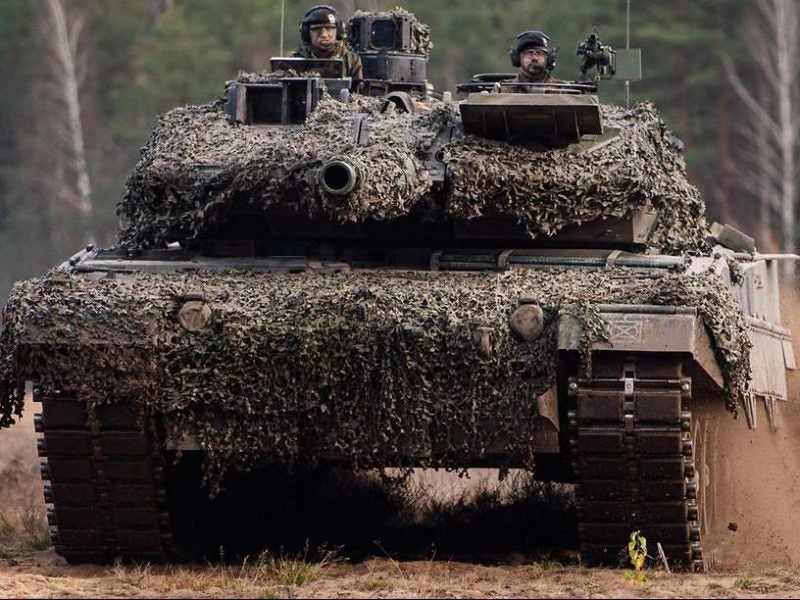
The German Bundeswehr armed forces will soon be able to purchase equipment and material at short notice following a change in the law to simplify some procurement processes.
The change will also simplify the process for awarding contracts for key technologies and will apply to the military and civilian security organisations.

Discover B2B Marketing That Performs
Combine business intelligence and editorial excellence to reach engaged professionals across 36 leading media platforms.
Following approval from the Bundestag in late January, the “Law on Accelerated Procurement in the Defence and Security Sector and Optimisation of Award Statistics” is expected to come into force at some point this month.
The crux of the law is to ensure the Bundeswehr has flexibility and autonomy to plug potential material shortages before they become apparent. The Bundeswehr said the law meant the procurement of key defence and security technology would ‘more strongly’ reflect the interests of Germany.
A strategy paper adopted by the German cabinet in mid-February outlines some of the areas that are seen as ‘key’ national technologies and therefore come under the scope of the new procurement rules. These include naval shipbuilding, artificial intelligence, networked operations management, protected and armoured vehicles, sensors, electronic warfare, and national security IT and communication technology.
Under the new law equipment for foreign missions can be procured ‘faster and unbureaucratically’, it also includes a provision making it easier to procure technology that is seen as ‘elementary’ to the security of Germany.
The law also brings in a provision to record procurement activities with Germany’s Federal Statistical Office. Germany has suffered from a lack of public information about procurement and acquisitions which according to Germany’s ministry of energy made it ‘not possible, for example, to make any basic statements about public purchasing or the number of tendering procedures carried out’.


