
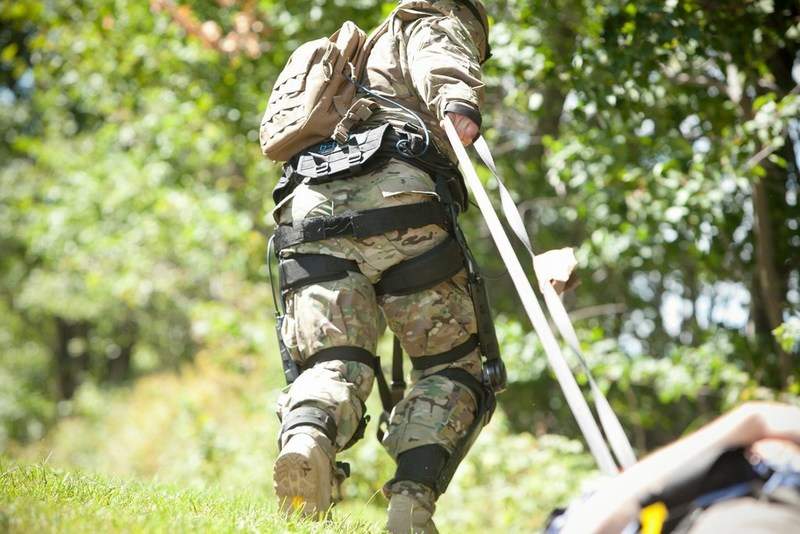

Lockheed Martin has licensed Dermoskeleton bionic augmentation technology from B-Temia.
Under the terms of the agreement, Lockheed will use B-Temia technology in products for military, industrial, commercial and first-responder applications.
Go deeper with GlobalData


Discover B2B Marketing That Performs
Combine business intelligence and editorial excellence to reach engaged professionals across 36 leading media platforms.
B-Temia president and CEO Stéphane Bédard said: "This agreement confirms our company's technology leadership and value of our work in increasing human mobility in both industrial and defense applications.
"Our arrangement with Lockheed Martin provides another avenue for our bionic technology to enhance human performance."
B-Temia's Dermoskeleton is claimed to be the basis for computer-controlled devices that can increase mobility and load-carrying capacity by counteracting overstress on the lower back and legs.
Lockheed Martin Missiles and Fire Control Advanced and Special Programs vice-president Glenn Kuller said: "This technology offers a pathway to increased load bearing and greater agility for our FORTIS industrial exoskeleton.

US Tariffs are shifting - will you react or anticipate?
Don’t let policy changes catch you off guard. Stay proactive with real-time data and expert analysis.
By GlobalData"It can also help to solve existing limitations of powered exoskeletons for our military and first responders. We're excited about the potential we see here."
The Dermoskeleton uses high-end sensors and advanced artificial intelligence proprietary software to sense the user’s mobility intentions and generate synchronised movements at the motorised knees.
This robotic system is capable of sensing the intended movement and it can provide the right level of assistance in perfect symbiosis with the body motion, B-Temia stated.
Lockheed's FORTIS exoskeleton is an unpowered, lightweight exoskeleton designed to increase an operator's strength and endurance by transferring the weight of heavy loads from the operator's body directly to the ground through a series of joints at the hips, knees and ankles.
Image: Lockheed Martin’s agreement with B-Temia allows it to use the latter’s proprietary Dermoskeleton technology. Photo: courtesy of Lockheed Martin.



