

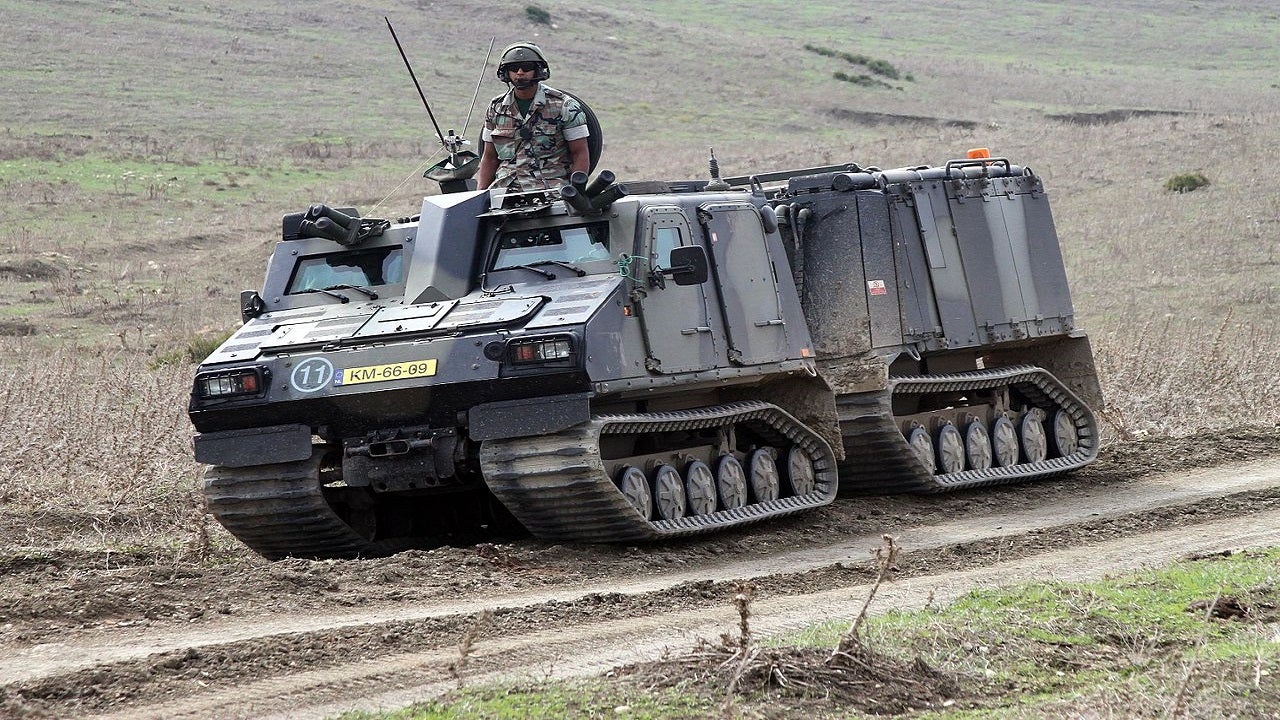
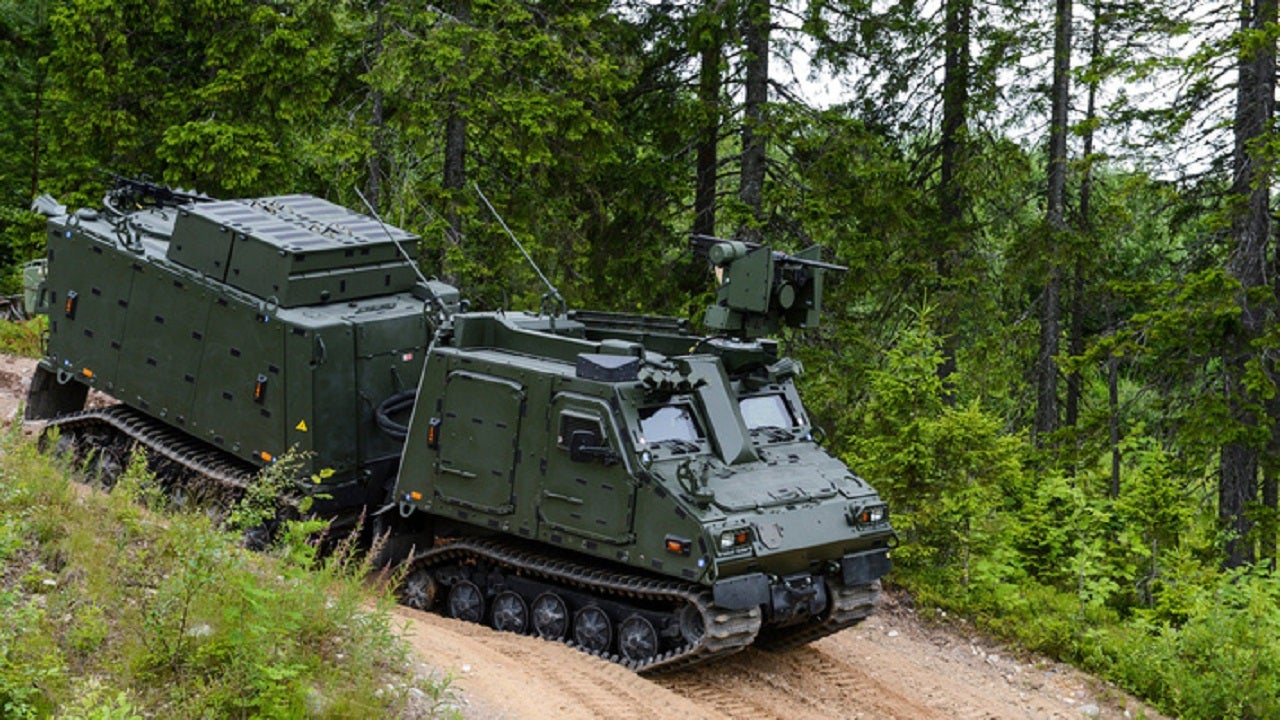
Viking (BvS10) is a fully-amphibious armoured all-terrain vehicle consisting of two tracked vehicle units linked by a steering mechanism. The UK Ministry of Defence ordered 108 Vikings from BAE Systems, Land Systems Hagglunds (formerly Alvis Hagglunds), in three variants of troop carrier (TCV), command vehicle (CV) and repair recovery vehicle (RCV).
The BvS10 vehicle was developed based on the operationally proven capability of the Swedish Hagglunds Bv206 and Bv206S vehicles. More than 11,000 vehicles were in service in 40 countries as of 2017.
Recommended White Papers
Recommended Buyers Guides
The Viking, fitted with a more powerful engine, is larger and faster than the Bv206S and has greater load capacity.
Some of the vehicle bodies were built at the Land Systems manufacturing plant in Telford, UK, while final production and assembly was carried out at Land Systems Hagglunds’ facility in Ornskolsvik, Sweden. The vehicles will be in service beyond 2031.
Viking amphibious all-terrain vehicle deployments
The UK’s Royal Marine Commandos took delivery of the first batch of production Viking all-terrain (protected) vehicles in July 2003.
Initial operating capability was achieved in 2005 and final deliveries were in early-2006. The Viking entered service with the UK Army in April 2006.
In October 2006, the Viking was first operationally deployed with the Royal Marine Commandos in southern Afghanistan. A total of 33 vehicles were deployed at that time.
The UK MoD purchased 166 Vikings BvS10 Viking mkI, of which approximately 50 were deployed in Afghanistan by the Royal Marines and other units.
BAE Systems entered contracts with Czech company VOP CZ and Italian company Goriziane Group in 2017 for the production of components for the BvS10 armoured vehicles.
Viking ATV orders and deliveries
In May 2007, the UK MoD placed an order for an additional 21 Viking vehicles for transporting equipment for the UK Army’s new unmanned aerial vehicle (UAV), called Watchkeeper UAV.
The UK MoD placed an order for a further 14 Viking vehicles, including nine repair recovery vehicles, one command vehicle, and four troop carriers, for deployment in Afghanistan in
June 2008. Nine more vehicles were ordered in February 2009 to maintain capability in theatre.
An ambulance variant of the Viking was trialled by the British Army in Afghanistan in February 2008. The Swedish Defence Materiel Administration signed a $100m contract with BAE Systems in January 2012 to buy 48 Viking vehicles. BAE Systems secured an extended order worth $120m to provide an additional 102 Viking vehicles for the Swedish Armed Forces in December 2013.
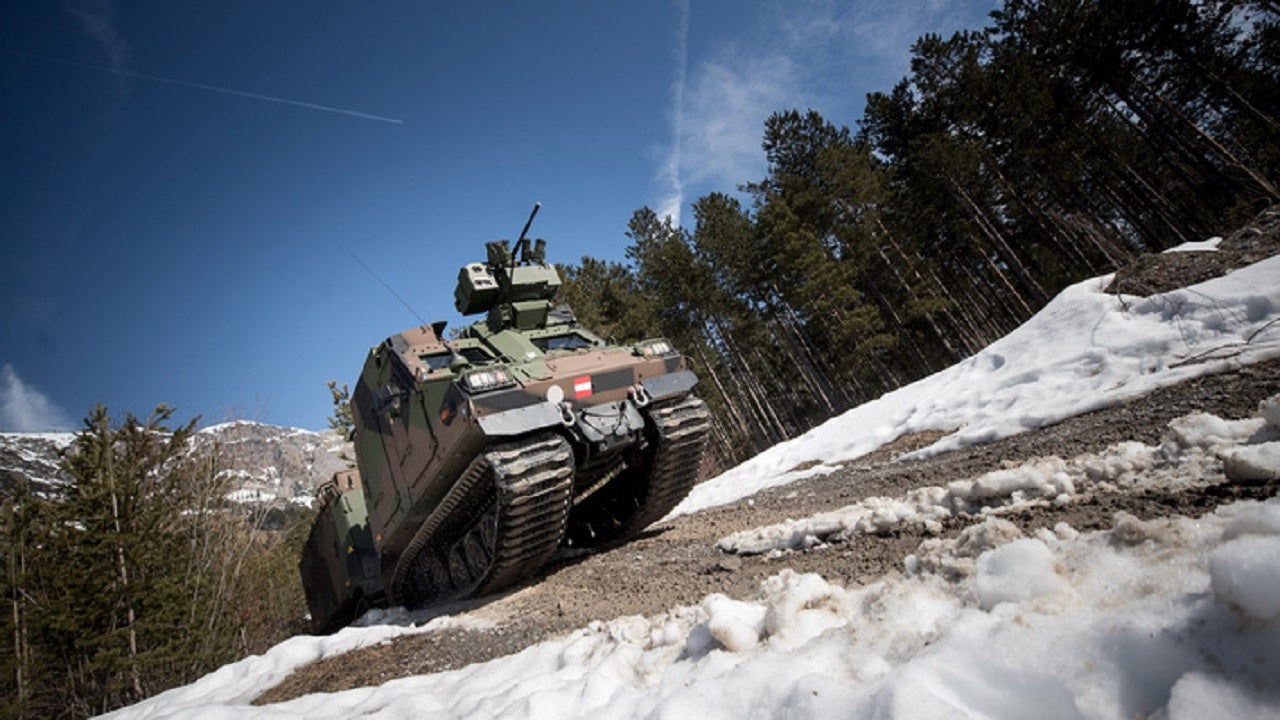
The order included a troop carrier, command vehicle, ambulance, and logistic carrier variants. BAE Systems was awarded a contract for the delivery of 32 armoured personnel carrier variants of the BvS10 to Austria in June 2016. First four deliveries were made in February 2019.
Warthog ATTC Viking replacement
In December 2008, the UK MoD announced plans to procure 100 new vehicles to replace the Viking vehicles operating in Afghanistan with new vehicles named Warthog. In December 2008, the MoD announced that the Warthog would be based on the Singapore Technologies Kinetics Bronco all-terrain tracked carriers (ATTC). The contract value for the vehicles was £150m ($243m).
The delivery of more than 100 Warthog vehicles began in September 2010 and concluded in June 2011.
Warthog has four variants of command, troop carrier, repair and recovery, and ambulance. UK troops were trained in March 2010 in operation and maintenance for the deployment of Warthog into service.
BvS10 Viking mkII upgraded ATV
The UK ordered 24 improved versions of the vehicle known as the BvS10 Viking mkII for £24m ($36.7m) in September 2009. The last vehicle was delivered in March 2010 for deployment in Afghanistan. The contract also included modifications such as fitting urgent operation equipment. Of the total, two were command vehicles and 22 were troop-carrying variants.
The improvements included a larger and more powerful engine, increased protection levels, a bigger alternator to generate more electrical power, and upgraded brakes, suspension, and steering unit. The load carrying capacity, however, remained to be the same.
In December 2009, DGA (French armament procurement agency) placed a contract for 53 BvS10 mkII vehicles.
The Viking vehicle, which can operate in temperatures from -46°C to 46°C, was selected for its multi-role and world-wide operational capability in jungle, desert, and Arctic conditions and for rapid deployment.
The first prototype Viking vehicles were delivered in June 2001. The vehicles successfully completed an 18-month series of trials in Norway, the UK, Sweden, and Oman. In Norway, the vehicle successfully completed a winter deployment inside the Arctic Circle.
Vikings were transported to Oman in September 2001 to take part in Exercise Saif Sereea 2, where full operational testing was carried out in the extreme hot and dry desert conditions.
In June 2005, the Netherlands Defence Materiel Organisation placed a contract with Land Systems Hagglunds for 74 BvS10 all-terrain vehicles for the Royal Netherlands Marines. The vehicle was procured in four variants; troop carrier (46 vehicles), command (20), repair and recovery (four) and ambulance (four).
The vehicles supplemented the Bv206 vehicles in service with the Marines since the early-1990s. Deliveries began in January 2006 and the Netherlands had 66 vehicles by 2008. The country has 73 Vikings and 88 Bv206s as of 2020 and is planning to replace some of the vehicles with 124 new tracked vehicles beginning 2027.
The UK Ministry of Defence placed a $61m contract to refurbish 99 Viking vehicles and bring to a common MkII mine-protected amphibious capability. The contact was awarded in October 2012 and the upgrade was completed in April 2016.
Viking vehicle design
The Viking vehicle consists of two linked tracked units, which are articulated vertically and horizontally for steering and for manoeuvring over rough terrain. All four tracks drive continuously, providing maximum tractive effort in all conditions. The rubber tracks systems are supplied by Soucy International of Quebec, Canada.
The body is of armoured steel construction, while the rounded edges and smooth contours of the profile assist in minimising the radar cross-section.
Viking’s design allows for upgrades and for the installation of modular subsystems to suit specific operational requirements such as add-on armour, a range of weapon mounts, and load changers and standard cargo platforms.
The BvS10 APC variant delivered to Austria features a 360° observation system with six infrared cameras and displays to provide greater situational awareness. The APC also features a remote-controlled weapon system (RCWS), which can be operated by the crew and the commander.
BVS10 armour
Bolt-on armour plates provide protection against 7.62mm armour-piercing rounds and 152mm artillery shell fragments from a range of more than 10m. The vehicle is rated to protect against 0.5kg charge anti-personnel mines.
BAE Systems Hägglunds is supplying the UK MoD with an initial 17 mine protection kits for the Viking.
Cummins turbo diesel engine
The vehicle is equipped with a 5.9l in-line six-cylinder turbo diesel engine designed by Cummins and producing 250bhp (183kW at 2,600rpm), more than twice the power of the Bv206. The maximum torque is 840Nm at 1,600rpm.
The Allison MD3560 six forward plus one reverse speed automatic transmission has differentials and final drives on both the rear and front cabins. Hagglunds produced new designs of drive sprockets, tracks, road wheels, chassis, and suspension for the Viking.
Steering is by hydraulic rams that articulate the front and rear cabs in response to the driver’s inputs.
Steering does not require one track to be braked as in other tracked vehicles, which gives an advantage in increasing the vehicle’s capabilities in snow, sand, and soft ground.
All-terrain mobility
The fully laden weight is 10t, but the Viking maintains good mobility on soft terrain such as snow, mud or sand because the ground pressure is minimised by the even load distribution over the four tracks.
The tracks are of 620mm-wide moulded rubber with chord. The mean maximum ground pressure is about the same as that of the Bv206 vehicle, which is 4t lighter. The vehicle retains mobility even if a track is damaged by a mine.
Viking’s ground clearance has been greatly increased over that of the Bv206 family of vehicles to enhance the cross-country capabilities. The turning circle is 14m in diameter.
The Viking can ford through water up to a depth of 1.5m without preparation. It is fully amphibious, being able to swim in deeper water with less than two minutes preparation including closing holes and fitting a front vane to prevent a bow wave washing over the front windows. The speed of the vehicle in water is 5km/h.
The vehicle can be deployed from all Royal Marines landing craft and transported to the area of operations by C-130 Hercules and C-17 Globemaster. The unladen Viking can be underslung and airlifted by an RAF Chinook helicopter. The Viking can be split into two sections in just 20 minutes to be carried by the Merlin helicopter.
Viking’s speed on flat terrain is comparable to that of a modern infantry fighting vehicle. The speed requirement specifications of 50km/h on level class A roads, 35km/h on tracks, and 15km/h cross country exceeded in vehicle trials. The range on metalled roads is 300km.
Front and rear cabins
The front cabin of the Viking accommodates the driver at the front left, plus three fully-equipped marines.
The rear and forward cabins are linked by a two-way voice communications unit. The rear cabin can carry eight fully equipped marines. Alternatively, the rear cabin can carry a mortar section, a heavy machine gun section, or a fully-equipped anti-tank detachment with Milan anti-armour missiles and firing posts. Both cabins are fully air-conditioned.
General Dynamics UK Bowman digital communications system is fitted to the vehicles.
Viking weapon and self-defence systems
In its normal deployment, the vehicle remains out of contact with hostile troops, but the vehicle’s self defence systems can be deployed in case of an attack or an ambush.
The roof of the forward cabin is fitted with a ring mount for a 12.7mm Browning heavy machine gun or a 7.62 general-purpose machine gun. The driver or vehicle commander can operate smoke dischargers on the front of the vehicle, which can fire smoke or white phosphorous grenades.
