

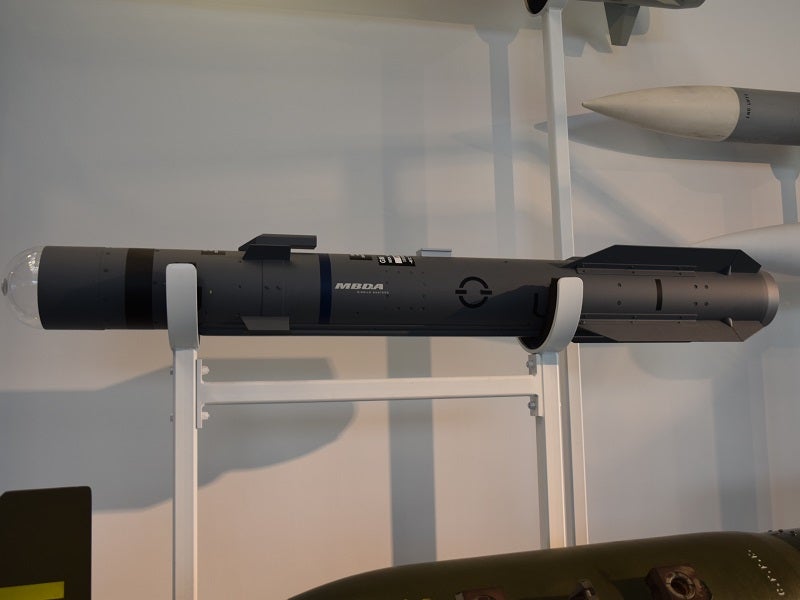
The Brimstone advanced anti-armour missile is developed by European missile manufacturer MBDA (formerly Alenia Marconi Systems) with American aerospace and defence company Boeing as the primary subcontractor.
Brimstone is a lightweight strike missile equipped with a dual-mode millimetre wave/semi-active laser (mmW/SAL) seeker that empowers it to engage fast-moving vehicles or vessels on land and at sea and in direct and indirect modes of operation.
Recommended Buyers Guides

It is a ‘one missile multiple platform’ system that can be used against platforms ranging from fast jet, attack helicopters, remotely piloted air systems, to land and maritime platforms, using the same missile.
The missile system is planned to be integrated into Protector, a next-generation medium-altitude, long-endurance (MALE) UAV that will serve the British Royal Air Force (RAF).
Brimstone missile development details
The Brimstone missile system entered a pre-production development programme in 1996. Quantity production of the missile began in late-2004.
The missile entered service with initial operational capability (IOC) on the RAF Tornado GR.Mk4 aircraft in March 2005. Following a series of highly successful batch and service evaluation trials, full operational capability (FOC) was achieved in December 2005.
In May 2008, the RAF issued an urgent operational requirement for an upgrade to the dual-mode seeker, in order to give the missile system a man-in-the-loop capability to reduce the possibility of collateral damage.
The missile system was operationally deployed on Tornado GR4 aircraft in Iraq and Afghanistan in 2009.
The RAF placed an order with MBDA for additional Brimstone missiles in December 2010 and a further order in August 2011. MBDA delivered the 500th missile in February 2012.
The Brimstone missile made its first firing against a fast in-shore attack craft in June 2012. MBDA received a £35m contract from the UK Ministry of Defence in November 2013 to supply Brimstone missiles for five years.
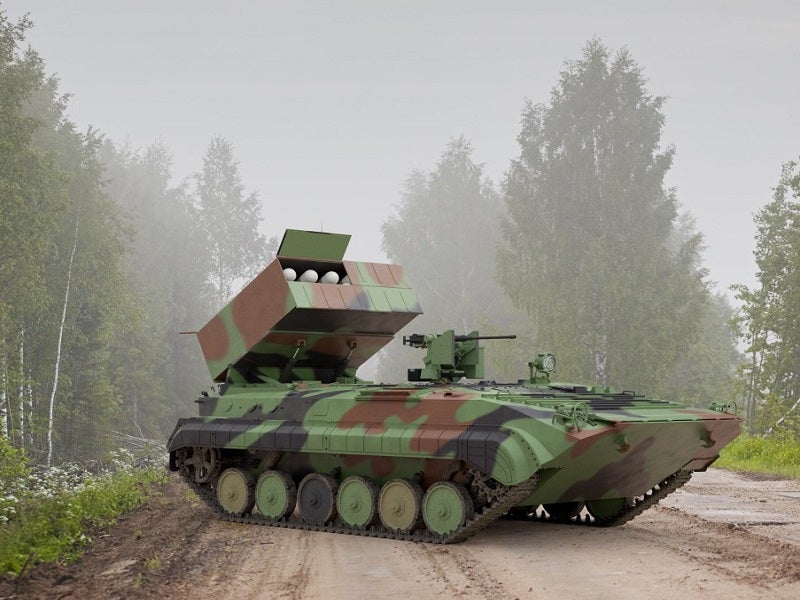
The company demonstrated the missile’s precision low collateral damage capability from a MQ-9 Reaper remotely piloted aircraft in January 2014, while the maritime capability was demonstrated against a fast in-shore attack craft in March and April of the same year. Polish defence contractor Polska Grupa Zbrojeniowa (PGZ) and MBDA unveiled a tank destroyer vehicle armed with Brimstone missile at MSPO 2019 defence exhibition in Poland in April 2019. The companies signed a statement of co-operation to offer the integrated solution to Poland and other export markets.
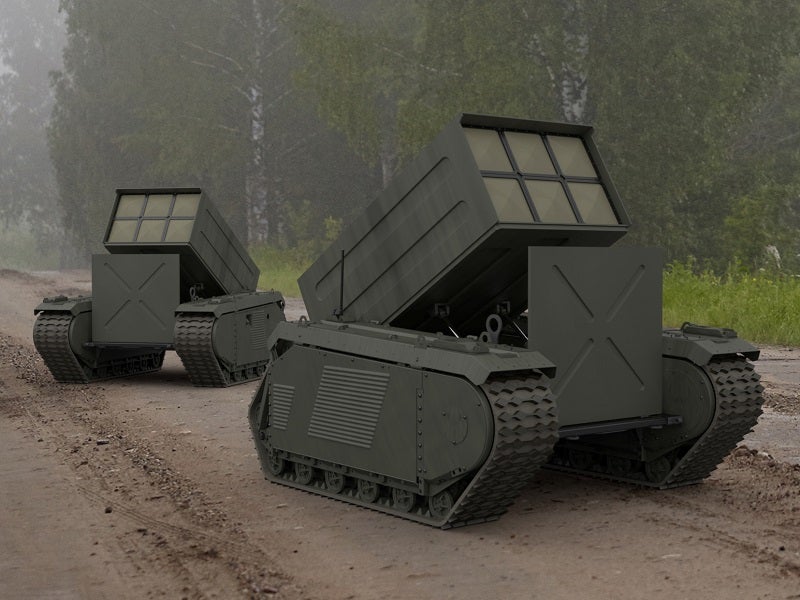
Milrem’s THeMIS unmanned ground vehicle (UGV) integrated with the Brimstone missile was demonstrated at the DSEI 2019 exhibition in London, UK, in September 2019. The demonstration proved that the missile can be equipped on UGVs to provide organic force-multiplier capability for the tactical commander.
Brimstone missile system features
Brimstone has a length of 180mm, weight of 50kg, and diameter of 180mm. It is a combat-proven, low collateral, close air support weapon that can be ground or air-launched. Ground-launched missile firings have been successfully carried out at the Yuma Proving Grounds in Arizona, US.
The system can be fired from fixed or mobile ground launchers and was proposed for installation on the cancelled UK Tracer armoured scout and reconnaissance vehicle project.
When air-launched, the missile meets and exceeds RAF requirements for a long-range anti-armour weapon, giving fighter aircraft the stand-off capability of destroying tanks and armoured assets deep behind enemy lines.
Brimstone is carried by the RAF’s Tornado GR4, GR4A and Eurofighter Typhoon aircraft, and will replace the RBL 755 cluster bombs.
The small size and weight of the missile allows it to be integrated onto a wide range of helicopters and fixed-wing aircraft, including the L-159, Hawk and F/A-18.
Anti-tank warhead
Brimstone is armed with a tandem high-explosive anti-tank warhead capable of penetrating explosive reactive armour.
The front charge initiates the explosion of the armour and clears the path for the main charge to penetrate it with the anti-tank jet dart.
Brimstone ‘fire and forget’ missile system
Brimstone is a fully fire-and-forget system, requiring no further interaction from the launch platform or a post-launch target designator.
After leaving the launcher, the solid propellant rocket motor accelerates the missile to supersonic speed.
This motor has a short burn time and very low smoke emission, providing a very low visual and infrared signature, minimising the probability of detection by hostile sensors.
Radar seeker of the Brimstone missile
Brimstone is equipped with a small, robust millimetric wave radar seeker operating at 94GHz, providing the capability to operate in all weather conditions, day and night. The seeker operates in low visibility and contaminated battlefield conditions and is not susceptible to battlefield obscurants such as smoke, dust, flares and chaff.
The high-millimetric band seeker provides a high-resolution radar return image of the target, while the frequency gives a small beamwidth and therefore, very high angular resolution and reduces unwanted clutter for the given antenna size, which is limited by the diameter of the missile.
The millimetre wave radar enables wideband operation, facilitating the use of very sophisticated electronic countermeasures. Millimetric radar attenuates more rapidly than conventional centimetric radar in rain, sleet and fog, but its advantage is high penetration, in comparison to infrared sensor systems when countermeasures are employed.
Brimstone’s seeker incorporates a terrain avoidance capability, allowing it to cruise at a fixed height above ground.
A digital autopilot provides mid-course guidance and uses a high-accuracy digital inertial measurement system for high-precision navigation to locate targets at long range and in off-boresight operations.
The highly advanced guidance system on the launcher’s fire control unit and missile uses the target coordinates, course, speed, distance to target, missile trajectory data and data from other sensors to direct the controls and produce the optimum flight path to the target.
Multiple launch firing
In the event of a group of hostile armoured vehicles being identified on the battlefield, multiple Brimstone missiles can be fired in salvo. The missiles can fly out from a single platform and spread out to cover a large area.
Where hostile forces have in-line formations of armoured vehicles, Brimstone can be flown down the same corridor to attack the formation.
Engagement algorithms in the onboard computer reduce the probability of more than one missile hitting the same target. In addition, the fire command and control system can allocate individual missiles to engage sequentially numbered valid targets.
Brimstone damage control system
During the search phase of the missile flight, the millimetre wave seeker carries out a sweep search for targets on the ground directly ahead and to each side of its path.
For low collateral damage control, the missile can be programmed not to initiate target search until it has passed a given point. This allows Brimstone to safely overfly friendly forces.
Brimstone can also be programmed to cease target search beyond a determined engagement area or to accept a target only within a specified area.
Embedded algorithms can be told to attack only valid targets within a specified area. The high selectivity allows Brimstone to target armoured vehicles and ignore other fixed or moving assets, such as houses or cars. It is also possible to programme the missile to engage targets with a specific radar signature, for example, patrol boats.
The missile is fitted with a programmable self-destruct mechanism.
Brimstone missile upgrades
Brimstone 2 is an improved version of the Brimstone missile for a high impact single missile shot with pin-point accuracy and low collateral damage.
It features a new dual sensor seeker technology comprising SAL and mmW radar sensors.
The 1.8m-long missile has a weight of 116lb (52.7kg) and diameter of 0.18m.
It was fired at fast targets with a telemetry system in October 2013 and fitted to a Typhoon aircraft for the first time in December 2014.
Production of Brimstone 2 began in July 2014 and the missile entered service with the UK RAF’s Tornado GR4 aircraft in July 2016.
The UK Ministry of Defence (MoD) placed a £400m ($565m) order with MBDA to deliver upgraded Brimstone 2 precision-guided air-to-surface missiles for the RAF Typhoon jets, in March 2018.
In March 2019, Brimstone 3, an ultra-high precision missile system, was successfully test-fired for the first time at the Vidsel Trials range in Sweden. The latest variant with new hardware features will provide advanced surface to surface capability. MBDA received a contract from the UK MoD to deliver an advanced software enhancement to the Brimstone 3 weapon system in February 2021.
