
 The NATO operation in Libya shows stark military gaps in the defence sectors of the EU member states, according to a new report published by the UK House of Lords.
The report ‘European Defence Capabilities: lessons from the past, signposts for the future’ suggests that the US ‘leading from behind’ involvement in Libya was essential as European states lack sufficient levels of military intelligence on their own.
Go deeper with GlobalData


Discover B2B Marketing That Performs
Combine business intelligence and editorial excellence to reach engaged professionals across 36 leading media platforms.
Surveillance capability, air-to-air refuelling, smart munitions, strategic and tactical transport, as well as sufficient medical support are other shortcomings in the defence sectors of individual EU states, says the report, published today.
European External Action Service (EEAS) secretary-general Pierre Vimont told the EU sub-committee on foreign affairs, defence and development policy conducting the inquiry that a repeat of the Libya operation would not be viable if the EU had to rely only on its own military capabilities.
European Defence Agency (EDA) director Madame Claude-France Arnould agreed, stating that a common ground of European defence capability is necessary; with nations needing to improve the way communications and information systems are used.
Arnould suggested that the EDA could help Member States to develop standardisation, common certification, a common concept of employment, which could add to interoperability on the ground.

US Tariffs are shifting - will you react or anticipate?
Don’t let policy changes catch you off guard. Stay proactive with real-time data and expert analysis.
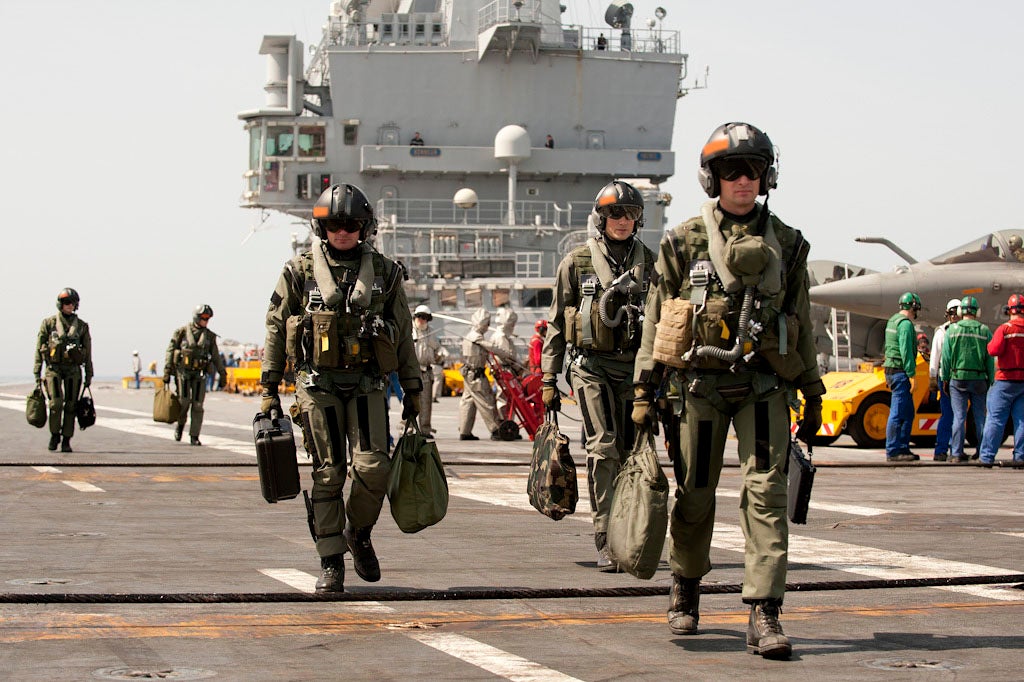
By GlobalDataThe European involvement in Libya was heavily dependent on the UK and France, which together account for some 50% of European military capability.
However, the report suggested that some smaller countries had shown to be ‘serious defence players’, including countries outside NATO.
Belgium, Denmark, the Netherlands, Norway and Sweden all played significant roles, while some larger states, such as Germany took a back seat, despite having a large defence budget.
The sub-committee concluded that even though Libya is not an overall signpost for the what is ahead, it seems likely that the US will take a backseat in future military operations concerning Europe.
The report stated that the UK and France would need to take the main burden in the event of similar military operations in the future, but it was suggested that Member States should start working with the US to fill the gaps in military capabilities.
Image: The European involvement in Libya heavily depends on the UK and France, suggests the House of Lords reports. Photo: courtesy of NATO.



